interdisciplinary laboratory
exploring and shaping places of remembrance connected to experiences of war in Irpin
01 / About
The laboratory brings together the Irpin community and a multidisciplinary group of practitioners to work with four sites of remembrance connected to experiences of the Russian-Ukrainian war. Through research, dialogue and collaboration, participants will develop concepts for these sites and explore new approaches to memorialisation in Ukraine.
Approach
Each team works with the memory of specific events and places, drawing on personal testimonies and the lived experiences of those connected to them.
Participants
Architects, artists, urban practitioners, researchers, historians and cultural practitioners working together in interdisciplinary teams alongside four curators.
Outcome
Four concepts for four sites of remembrance, presented to the community and the Irpin City Council.
02 / Sites
Four sites — four shared explorations of new approaches to preserving memory
The laboratory is designed to help make the city’s work with memory inclusive, ethical and professionally grounded.
The Car Graveyard
сivilian vehicles abandoned during the evacuation of Irpin
How can a site filled with bullet-ridden and burned civilian vehicles become a memorial space while preserving its documentary value? These vehicles are material evidence of the mass evacuation of Irpin residents during the fighting in 2022. The laboratory will explore how this improvised storage site might be transformed into a place that preserves and communicates the stories of those who fled the city.
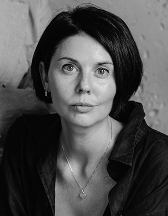
CURATOR: KSENIA MALYKH
Curator, art historian and Head of Promprylad Art Center. Her work focuses on analytical approaches to contemporary art and ethical engagement with collective memory in public space. For nine years, she led the Research Platform at PinchukArtCentre and curated or produced Ukrainian projects for the Venice Biennale in 2019, 2024 and 2026.
Heroes’ Alley
portraits of fallen defenders displayed in the city’s central square
Portrait banners commemorating fallen defenders became the city’s first immediate response to loss. Today, however, this format is reaching its limits. As the number of names grows and temporary structures deteriorate over time, questions emerge about how to ensure dignified remembrance in the long term. This is a place where private grief meets the everyday rhythm of the city’s main public square. How can an existing commemorative practice evolve into a sustainable system of remembrance?
CURATOR: KATERYNA SEMENIUK
Mentor of the Irpin Laboratory project. Curator and cultural manager, co-founder of the memory culture platform Past / Future / Art. Since 2022, she has worked extensively on the memorialisation of the Russian-Ukrainian war and advocated for changes in public memory practices in Ukraine. She is one of the co-authors of the Memorialisation Practices Laboratory (2024), co-curator of the Ukrainian Pavilion at the Malta Biennale (2024), and co-curator of the exhibition What We Talk About When We Talk About Crimea at Ujazdowski Castle Centre for Contemporary Art in Warsaw (2026).
Checkpoints
a network of six positions that formed the city’s defensive line
The defence of Irpin relied on cooperation between residents with combat experience gained during the war in eastern Ukraine and civilian volunteers. Today, the network of six defensive checkpoints calls for a unified system of interpretation that can preserve the history of each location while connecting them into a shared narrative. The project explores how former fortification sites can be transformed into places of remembrance through a coherent visual and spatial concept.
CURATOR: ANASTASIIA PASIEKA
Curator and trained architect whose practice is shaped by an interest in spatial context and the relationship between environment and society. Her work focuses on projects dealing with collective memory and traumatic experience. She coordinated the Memorialisation Practices Laboratory (2024) and worked at the Living Memory Centre of the Babyn Yar National Historical and Memorial Reserve.
Remembering civilian victims
a commemorative space on the banks of the Irpin River
This memorial space is dedicated to civilians killed during the full-scale invasion. Rather than a traditional monument, it takes the form of an open landscape for reflection, remembrance and healing. The project explores artistic and landscape-based approaches that can preserve the memory of profound human loss while integrating commemoration into a public space that remains part of everyday urban life.
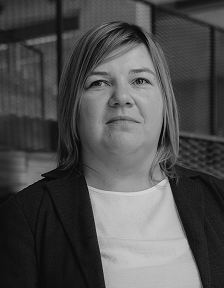
CURATOR: LIZAVETA HERMAN
Art historian and curator. Co-founder of The Naked Room gallery (2018–2025) and co-curator of the Ukrainian National Pavilion at the 59th Venice Biennale. She has held a fellowship at the Institute for Human Sciences (IWM) and led a research seminar on wartime art at the Harvard Radcliffe Institute. Her experience in memorialisation includes curating the competition for a memorial to the victims of the Holodomors in Ukraine (Melitopol, 2021). She is also co-author of landmark publications on Ukrainian Sixtiers art and Soviet mosaics.
We are bringing together an interdisciplinary team to develop thoughtful, professionally grounded approaches to places of remembrance through research, dialogue and collaboration with the local community.
We welcome applications from people working in:
Architecture
Art
Urbanism
Research
History
Philosophy
Design
Other disciplines*
*are also welcome. If your expertise could strengthen the team, we would love to hear from you.
Apply if you:
- work with art, memory, history, space, cities or communities
- are prepared to engage with trauma-informed approaches
- enjoy working collaboratively
- are interested in research, dialogue and complex questions rather than quick solutions
04 / Participation
The project runs from August to December 2026, with the main working phase taking place between August and October.Participation can be combined with work or study commitments. Expected online engagement is approximately 8–12 hours per week.Participants will receive an honorarium.
In August, all participants will join a research visit to Irpin to explore the sites and meet members of the local community. Travel, accommodation and meals will be covered by the organisers.
01
June 2026
Open Call
02
July 2026
Selection of participants
03
August 2026
Laboratory begins
04
September–October 2026
Development of concepts
05
December 2026
Presentation of final proposals
Join the team of co-creators shaping the future of remembrance in Irpin. Applications are open until 5 July 2026
05 / Partners
The project is initiated by Sigma Irpin Charitable Foundation in partnership with the Irpin City Council and supported by the Partnership Fund for a Resilient Ukraine (PFRU), funded by the governments of the United Kingdom, Estonia, Canada, Norway, Finland, Switzerland and Sweden. The project’s special partner is the memory culture platform Past / Future / Art.
Together with experts in memory culture, art and memorialisation, the project seeks to support thoughtful, ethical and context-sensitive approaches to engaging with the experiences of war in the city.